Setting prices for your contracting business is essential for bringing in customers and making a profit. This article answers the common question: What is value-based pricing?
Learn how this pricing strategy works compared to cost-plus pricing so you can see if it’s right for your home service business. You’ll get the pros and cons, plus common misconceptions about this method. Read to the end for four additional tips to help you when using value-based pricing with your customers.
What Is Value-Based Pricing?

Value-based pricing is an alternative to cost-based pricing. This pricing strategy sets pricing by what customers are willing to pay for a product or service.
You’re probably familiar with value-based pricing in the world of luxury goods, like automobiles, handbags, and watches. High-end versions of these items are priced based on the perceived value and exclusivity of owning them.
While these luxury items are typically of good quality, they may not cost that much more to produce than middle-of-the-road products. However, consumers have determined that they are worth more through status or rarity.
This branding technique has become so popular lately that two French marketing experts wrote a book about it: The Luxury Strategy. It’s considered a top resource for value-based pricing.
There is an emotional component to marketing and selling value-based items. It’s the opposite of pricing goods or services based solely on hard numbers.
Of course, in order to enjoy the leverage of value-based pricing, a business has to first conduct market research. You want customer data that shows this pricing method will work based on the perceived value of what you’re offering.
It’s important to make the distinction between perceived value and value-added selling. Value-added items improve the quality of life or solve a problem for consumers. But they tend to be more grounded in reality than perceived value products, which can take prices into the stratosphere.
For example, a fully loaded but affordable pickup truck could be considered a value-added purchase for most people. A customized Italian sports car that costs several years’ salary, on the other hand, sells mainly on its perceived value.
FROM ONE OF OUR PARTNERS — What Is a Pricing Strategy? Tips & Examples
How Does Value-Based Pricing Work for Contractors?

How would value-based pricing work for contractors? Perhaps you don’t even sell a tangible product but provide a service.
If you think about it, though, you’ve probably paid value-based pricing for a service yourself. Consider a time when you wanted “the best” when it came to hiring someone for an important task.
People pay for perceived value all the time when it comes to services like:
- Aesthetic medical and dental work
- Tailoring and clothing alterations
- Event planning and catering
- Financial consulting and investing
- Automotive maintenance and repair
- Veterinary care and pet boarding
You may not know it, but consumers also hire contractors based on their perceived value. They may pay based on price for simple services like plumbing repairs or garage door installations. But they are often willing to pay far more for niche or complex services like:
- High-net-worth home security
- Swimming pool installation
- Custom landscape design
- Sustainable bath and kitchen remodels
- Historic home renovations
- Whole-house entertainment systems
- Green pest control solutions
“Niche” is a key word here. A major part of value-based pricing is supply and demand. Therefore, you want to provide a service that’s both in demand and harder for customers to find. When you stand out from the competition in this way, you can often charge more for your services.
That’s where market research becomes a key to successful pricing strategies. Let’s look at a hypothetical example.
Value-Based Pricing in Action: Curb Appeal and Victorian Homes
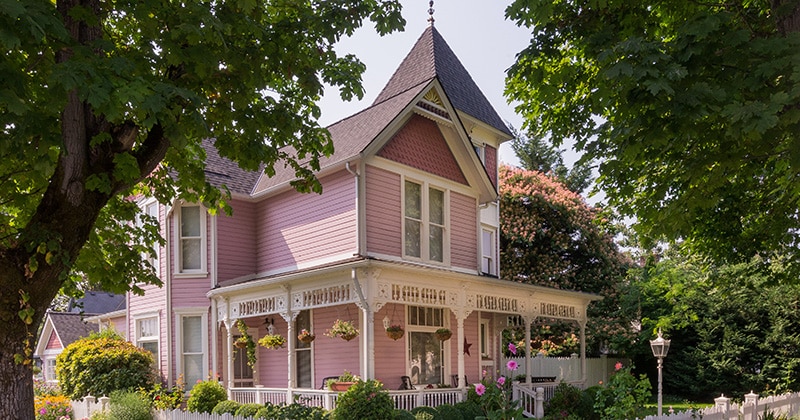
Imagine you own a roofing company in an area where tall Victorian homes are particularly common. You’re chatting with a buddy who owns a painting business and learn that Victorian property owners face two challenges:
- They want curb appeal updates that are in keeping with the historic authenticity of their homes.
- The height and complexity of the houses make it hard for these homeowners to find contractors for repairs and remodeling jobs.
You decide to conduct a market research campaign. You want to see what the competition and opportunities are like for this customer demographic. You use the following resources to obtain information:
- Public data on property values and recent home sales
- Social media polls and dialogue
- Surveys via your email list and sales funnel
- Connections with real estate agents
- Discussions with non-competitor colleagues
You discover that owners of Victorian homes in your county are frustrated with the lack of roofing contractors. They’re waiting months to do roof remodels, as there are only two companies willing to work on their properties. And those other contractors aren’t even nearby; they’re located in adjoining counties.
These homeowners are at the upper tier of income and property valuation. They are less concerned with price than with ensuring their homes look beautiful after a service is rendered. They’re used to paying whatever the going rate is for niche services and home improvements.
Based on this information, you decide to specialize in roofing for these types of properties. You charge a price that’s considerably higher than the average rate for roof remodels. In order to do this, you:
- Hire more roofing staff experienced in tall homes with complex roof designs.
- Use your line of credit to purchase longer extension ladders and scaffolding for tall homes.
- Increase your insurance coverage for the new equipment and greater project risk.
- Change your website to feature projects similar to those of your desired demographic.
- Buy advertisements in local publications promoting your specialty roofing services.
- Become familiar with historic home preservation laws and issues unique to older properties.
Homeowners jump at your availability because:
- You’re a local business and can work longer days due to having a minimal commute to job sites.
- You have more openings available than the competition, making the wait for remodels shorter.
- You come recommended by house painters and real estate agents familiar with the needs of Victorian homes.
- You’re able to offer emergency services for repairs after storms since you have the necessary workers and equipment.
RELATED ARTICLE — 3 Elements of Strategic Pricing Every Contractor Should Know
Common Misconceptions About Value-Based Pricing

Value-based pricing offers multiple benefits, which we review below. But it’s not a miraculous revenue booster, nor is it applicable to all businesses.
If you’ve never used value-based pricing before, you may have some common misconceptions about it. Before jumping in further, let’s go over these myths so you can avoid making mistakes with your contracting pricing strategies.
Myth #1: Value-Based Pricing Is a Guarantee of Success
Setting your prices at what you think is the perceived value of your services does not guarantee success. You may find you set the price too high for what customers are willing to pay.
Demand for your services can change, too. New competitors can enter the market and undercut your price. You can be especially vulnerable to this during downturns in the economy. This is when even affluent clients watch their budgets more closely.
Myth #2: Your Brand’s Value Is Linked to Value-Based Pricing
Using value-based pricing doesn’t necessarily elevate your brand. You still have to prove your worth to customers and provide high-quality services.
And the opposite is true. You can be a well-known brand in your location but still not succeed with value-based pricing. This can be due to incomplete market research or perhaps to choosing the wrong service for this pricing technique.
Myth #3: You Can Use Value-Based Pricing Without Conducting Market Research First
Attempting value-based pricing without doing your homework first will result in hit-or-miss results. You might succeed…but you won’t necessarily know why. This makes it hard to apply the same pricing method when launching new services. And you won’t likely be able to respond to changes in your market.
If you fail due to not performing adequate market research, you’ve wasted valuable time and resources. You might lose customers you could have brought in with lower prices, affecting your bottom line.
Myth #4: You Must Use Value-Based Pricing for All Your Contracting Services
There’s no rule that says you must apply value-based pricing everywhere if you offer multiple services. Say you run a full-service plumbing business. You’re in a rural area with little competition. So your offerings run the gamut from unclogging sinks to major kitchen and bath remodels.
You can keep prices low for minor jobs, adding a small fee for emergencies after hours and on weekends. But you can use value-based pricing for larger renovations, especially:
- Historic homes with antiquated plumbing
- Clients who want luxury fixtures
- Projects requiring environmentally friendly solutions
- Short-notice jobs for homeowners looking to sell quickly
- Seasonal projects like adding pools and fountains
Myth #5: You Should Be a Large, Established Business to Use Value-Based Pricing
Contracting companies of any size can use value-based pricing. The key is to provide a service or product that’s hard to find and to do it better than the competition. And the customer has to agree with the perceived value of your work when you set your prices.
There are certainly enterprise-level contractors using this model. However, it’s potentially better suited to small and mid-size businesses. One reason purveyors of luxury goods often succeed with value-based pricing is their ties to Old World craftsmanship.
You can be a one- or two-person outfit that creates stunning tile mosaics. Or you might be a tiny company that is the only one in town that knows how to repair windows with Colonial-era glass. Find your unique selling proposition and capitalize on it, regardless of your size!
Cost-Plus Pricing vs. Value-Based Pricing in the Home Services

You’re probably wondering: how is the value of a product determined? And how do you decide how to price a product or service?
The answer depends on which pricing strategy you employ.
We’ve discussed value-based pricing for home services in detail above. But let’s compare it to another method: cost-plus pricing.
Cost-plus pricing is the more common strategy used by contractors. You add up all the costs of producing an item or performing a service. That includes things like materials, manufacturing, labor, and overhead. Then, you add a markup in order to make a profit versus just breaking even.
For instance, as a landscaper, you could charge $300 for maintaining quarter-acre properties. That includes cutting the grass, trimming plants, and caring for flower beds.
The $300 price reflects $250 of labor, materials, and overhead like equipment servicing and fuel. You add $50 per yard for a profit. That’s the cost-plus method.
But say you’re doing yardwork in a wealthy gated community. You might decide to use a value-based pricing model there, charging $600 per visit.
The decision is based on market research. It shows residents there are willing to pay more for home services, as well as these unique benefits that your competition doesn’t offer:
- You use low-noise and manual equipment, as the HOA doesn’t like loud tools.
- Your employees are punctual and highly vetted with clean background checks.
- Your staff are skilled at working with fussy plants, like heirloom roses, and fish ponds.
- You know how to maintain hardscaping elements like pool decks and patios.
- You offer this neighborhood coveted Friday appointments for a tidy yard just before the weekend.
RELATED ARTICLE — 10 Business Expense Categories You Need to Consider
Pros and Cons of Value-Based Pricing
Like other pricing strategies, value-based pricing has its advantages and disadvantages. It’s smart to compare the pros and cons before committing.
Advantages of Value-Based Pricing
There is one prime benefit of using value-based pricing. That’s being able to bring in more revenue without increasing your workload. It’s ideal for businesses that want to stay small but still boost profits.
Other pros of this pricing method include the possibility of raising your brand image, as well as promoting customer loyalty. Hermès, a maker of luxury leather goods and apparel, uses this business model. Research shows that 40% of their customers feel more loyal to the brand, thanks to exclusive access and limited-edition products.
Disadvantages of Value-Based Pricing
As mentioned earlier, utilizing value-based pricing is not a guarantee of success. And the market for home services tends to be fluid. What works one year may not the next, especially if more competition enters your industry.
You could price yourself out of winning many customers. This is a particular risk during times of economic uncertainty. What customers are willing to pay during economic booms changes if they start worrying about a recession or inflation.
FROM ONE OF OUR PARTNERS — What Is Customer Relations? Everything You Need to Know for Your Business
4 Tips to Set Your Value-Based Price
Are you ready to start using value-based pricing for your contracting services? Here are four tips to help you set your price and have customers pay it:
- Review your market research periodically. As noted above, conditions can change. You may need to adjust your prices, or you may want to use value-based pricing in a new way. Keep an eye on your true competition, too, in order to know what they’re charging.
- Help clients understand the total cost of ownership. They’re not just paying for your service but for what it brings later. They might find a new roof requires much less maintenance. Or your remodel offers greater energy efficiency and saves on utility bills.
- Understand the difference between bespoke, luxury, and premium products. Bespoke products are one of a kind, made just for a single customer. Luxury products or services are exclusive but offered to more than one customer. Premium is the tier just below luxury, which could be another pricing level for your business.
- Be ready to go above and beyond for customers who pay value-based prices. They will expect the best, so you have to deliver. The good news is that if they’re happy, you will likely get customer referrals and repeat business.
RELATED ARTICLE — How to Write a Business Plan with Pricing Samples + Tips