Quick Answer: What Services Does a Handyman Offer?
A handyman typically offers small repairs, installations, assembly, light carpentry, painting, and routine upkeep around a home or rental property. Common handyman services offered include drywall repair, door and fence repair, TV mounting, furniture assembly, caulking, tile repair, and pressure washing. Work that requires a permit falls under a licensed trade, such as electrical or plumbing, is usually off-limits to unlicensed handymen, and the rules vary by state. Check your state’s rules before you list a service, and see how to price handyman jobs once your list is set.
Key Takeaways
Here are the main points to take from this guide before you build your list:
- A handyman services list works as your menu. It sets expectations, saves time on calls that go nowhere, and provides a basis for estimates and invoices.
- This guide covers 20 services in five groups: repairs and upkeep, installations, finish work, assembly and outdoor jobs, and licensing-sensitive work. More resources for the trade are in our handyman resource hub.
- Licensing rules for handyman work vary by state and sometimes by city. Dollar limits, permit rules, and trade licenses all play a part, and our handyman license guide explains the process.
- Be specific about scope. “Light electrical” and “light plumbing” tell customers more than “electrical” or “plumbing,” and they keep you within your limits.
- Pricing and insurance are decisions in their own right. See our guides on how to price handyman jobs and what insurance a handyman needs.
What Does a Handyman Do?
A handyman is someone who performs general repair and maintenance tasks for property owners. The U.S. Bureau of Labor Statistics (BLS) groups this work under general maintenance and repair workers, who fix and maintain machines, mechanical equipment, and buildings. About 1.6 million people held those jobs in 2025, and about 20% of them worked in real estate and rental and leasing, which includes property managers and landlords who hire for upkeep.
So what can a handyman do? Quite a lot, within the limits set by skills, tools, and local licensing rules. Property owners and managers hire for upkeep alongside homeowners, so a services list that speaks to both can reach more customers. Many handymen also grow into related work later, and our guides on starting a home renovation business and the general contractor path show where that can lead.
Homeowner spending is large. Harvard’s Joint Center for Housing Studies puts annual homeowner spending on improvements and repairs at about $517 billion as of the second quarter of 2026. It expects growth in that spending to slow to 0.5% by the second quarter of 2027. In a slower market, a clear list can help you stand out.
What Is a Handyman Services List?
A list of handyman services is simply a written list of the jobs you take on. It can live on your website, in a PDF, on your social profiles, or inside your estimates. Customers use it to check whether you do what they need, and you use it to keep your work within the skills and licenses you have. If you want a starting layout, Joist offers free estimate templates and a handyman invoice template.
Good lists are specific. “Drywall patching and repair” tells a customer more than “wall work,” and “light fixture replacement” is clearer than “electrical.” Where a service has limits, say so. That’s how you avoid calls for jobs you cannot take.

Why Make a Handyman Services List?
A written list does multiple jobs at once:
- It builds trust. Customers can see what you do and feel more confident that a task is within your skills. Pair the list with customer reviews to back it up.
- It saves time. You spend less time on calls about work you do not do, and customers spend less time guessing.
- It makes quoting faster. When your services are defined, you can build estimates from a standard set of line items instead of starting from scratch. Our guide on asking for a deposit shows how to take the next step once the customer says yes.
- It makes invoicing easier. The same services become the line items on your bill. Our guide to invoicing for handyman services shows what to include, and Joist’s invoices put it into practice.
- It supports your marketing. You can post it on your website and social profiles, and hand it to property managers, realtors, and neighbors.
- It supports online booking. If you let customers request jobs online, a list gives them clear options.
- It looks professional. A tidy, consistent list shows customers you run a real business.
Whether you show prices on your list is a separate decision. Our guide to pricing handyman jobs covers how to set rates, and our guide to handyman insurance explains the coverage you may need. You can also track the costs behind each job with our list of business expense categories.
Handyman Services at a Glance
This table summarizes the 20 services below. The last column flags what to check before you add a service to your list. It’s a general guide only, because licensing and permit rules differ by state and city.
| Group | Services | Check before listing |
|---|---|---|
| Repairs and upkeep | Drywall repair, door repair, fence and gate repair, caulking and weatherproofing, cabinet repair | Structural repairs may need a permit. |
| Installations | TV and shelf mounting, smart home devices, window coverings, small appliances, grab bars and accessibility aids, babyproofing | Anything wired into the home may fall under electrical rules. |
| Finish work | Painting, trim and finish carpentry, tile repair and installation | Larger projects can cross dollar limits. |
| Assembly and outdoor | Furniture assembly, pressure washing, gutter cleaning, landlord turnover touch-ups | Work at height needs extra care. |
| Licensing-sensitive | Light fixture and fan replacement, faucet, toilet and drain fixes | Often covered by electrical or plumbing licensing rules. |
Handyman Jobs List: 20 Services to Add to Your List
Use this handyman jobs list as a starting point. You do not need to offer all of these. Pick the handyman services to offer that you can do well, and add more as your skills and tools grow.
Repairs and Upkeep
These are the day-to-day fixes that make up much of a typical handyman’s work:
1. Drywall repair. Patching holes, fixing nail pops, and smoothing damaged walls are common small jobs. Customers often need a clean finish ready for paint.
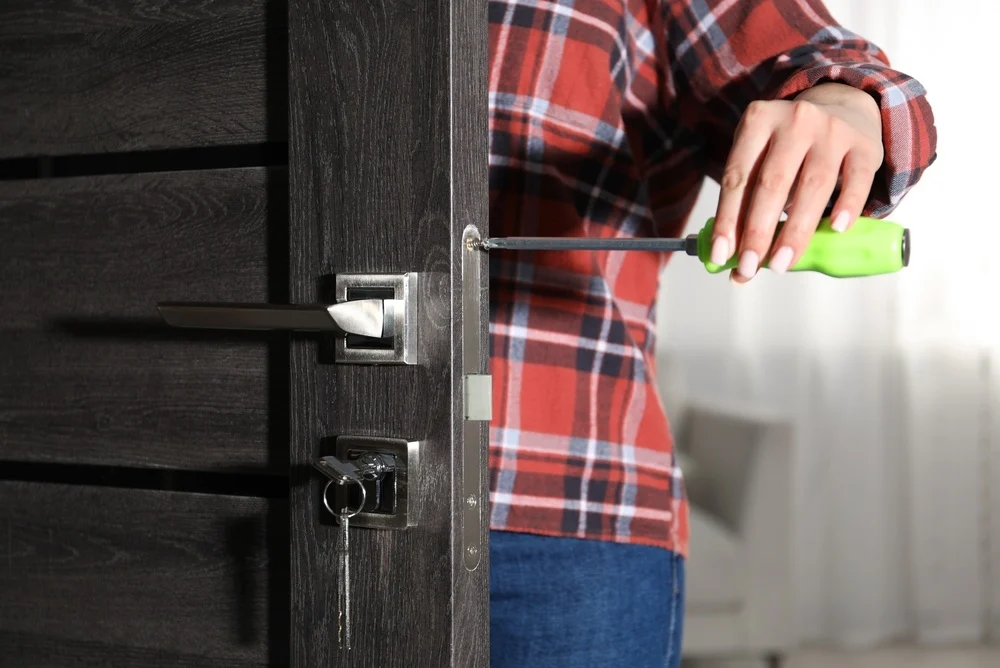
2. Door repair and adjustment. This covers sticking doors, loose hinges, worn strike plates, and swapping dated hardware. It is a good add-on to other work.
3. Fence and gate repair. Weather and age loosen posts and break panels and latches. Small repairs are very different from building a new fence, so state which you offer.
4. Caulking and weatherproofing. Re-caulking tubs and windows and adding weatherstripping are quick jobs that pair well with larger repairs.
5. Cabinet repair and hardware updates. Adjusting hinges, replacing pulls, and fixing loose doors can refresh a kitchen without a remodel.
Installations
Installation jobs involve mounting or setting up something the customer has already bought:
6. TV and shelf mounting. Mounting a TV or installing shelves calls for the right anchors and a stud finder, and a mistake leaves holes in the wall.
7. Smart home devices. Video doorbells, smart thermostats, and similar devices are easy to buy and harder to set up. Offering setup and installation can save customers time. Check local rules if a device needs to be wired into the home’s electrical system.
8. Window coverings. Installing blinds, shades, curtain rods, and shutters is a steady small job. Measuring and level mounting are where customers want help.
9. Small appliance installation. This can include built-in microwaves and under-counter units. Stay within what your license and local rules allow, especially for gas or hardwired appliances.
10. Grab bars and accessibility aids. Many older adults don’t want to move home. AARP’s 2024 survey found that 75% of adults 50 and older want to stay in their homes. Grab bars, handrails, and similar aids help them do that.
11. Babyproofing. Installing gates, cabinet latches, and outlet covers is a well-defined job with a clear scope.
Finish Work
Finish work covers the surfaces customers see and touch every day:
12. Interior and exterior painting. Painting is a common handyman service. Prep and masking take as long as the painting, so be clear about what you include. Our guide on how to estimate a paint job shows how painters scope the work.
13. Trim and finish carpentry. Baseboards, crown molding, and simple built-ins add polish to a room. List the specific tasks you do, such as trim installation or door casing. See Joist’s carpentry page if you do this work often.
14. Tile repair and installation. Replacing cracked tiles, regrouting, and small backsplash projects fit many handyman skill sets. Larger tile floors may need more experience and time.
Assembly and Outdoor Jobs
These jobs are quick to scope and often done in a single visit:
15. Furniture assembly. Ready-to-assemble furniture is a quick job that needs few tools. It can work well as a first job with a new customer.
16. Pressure washing. Driveways, patios, siding, and decks are common targets. If you add it to your list, our pressure washing pricing guide shows how others price it, and our guide to starting a power washing business covers equipment.
17. Gutter cleaning. Clearing gutters and downspouts is a seasonal job that suits regular customers. Work on ladders or roofs carries extra risk, so plan safety into every job.
18. Landlord turnover touch-ups. Between tenants, property managers often need patching, painting, caulking, and small repairs done quickly. This work can bring repeat business from the same owners and managers.
Licensing-Sensitive Work
These two services sit close to licensed trades, so check your local rules before you list them:
19. Light fixture and fan replacement. Swapping a fixture is a small electrical job. It is also work that many states treat as electrical, so check your state’s rules before you list it. Our guide to pricing residential electrical work is a useful resource, and our electrical page covers the software.
20. Faucet, toilet, and drain fixes. Replacing a faucet or fixing a running toilet is a small plumbing job. Many states license plumbing work, so confirm what you can do without a license. Check our plumbing page.
Which Handyman Services Need a License or Permit?
There is no single national rule. Each state sets handyman and contractor licensing, and some cities add their own requirements. Many states set a dollar limit for unlicensed work, treat electrical and plumbing as separate licensed trades, and require permits for structural or major system work.
California offers a clear example. Since January 1st, 2025, the state’s minor work exemption allows an unlicensed person to take jobs under $1,000 for labor and materials combined. The work cannot require a building permit, and the person cannot hire anyone to help, even if the job is under $1,000. Unlicensed handymen who advertise must say in the ad that they’re not licensed, and the exemption does not apply to anyone who advertises as licensed.
Other states set different limits or none at all. Before you add a service to your list, check these three things:
- Your state contractor licensing board, and any city or county rules
- Whether the work needs a permit
- Whether the work falls under a separately licensed trade, such as electrical or plumbing.
Our guide on how to get a handyman license walks through the process. If you’re unsure about a specific job, ask your licensing board before you advertise it.

How to Build Your Handyman Services List
Use these steps to turn your skills into a list customers can use:
- Choose services you can do well. Start with the work you do confidently, using the tools you already own. See our list of must-have handyman tools if you’re building your kit.
- Check licensing for each service. Remove or limit anything that needs a license you don’t have.
- Group services into categories. Use clear headings such as repairs, installations, painting, and outdoor jobs so customers can scan quickly.
- Define your limits. Write “light electrical: fixture and switch replacement” rather than “electrical” so customers know where your work ends.
- Pick your target customers. Homeowners, landlords, and older adults have different needs. A list aimed at landlords might lead with turnover repairs, while one aimed at seniors might lead with accessibility work.
- Add photos. Before-and-after pictures show your quality. You can store job photos with your estimates and invoices in Joist.
- Publish it where customers look. Put it on your website and social profiles, and share it as a PDF with property managers and neighbors.
- Keep it current. Review your list when you add skills or tools, or when licensing rules change.
Sample Handyman Services List
Here is a short example you can adapt:
- Repairs: drywall patching, door adjustment, fence and gate repair, caulking
- Installations: TV and shelf mounting, window blinds and curtain rods, smart doorbells and thermostats, grab bars
- Painting and finishing: interior painting, trim installation, tile repair
- Assembly and outdoor: furniture assembly, pressure washing, gutter cleaning
- Property turnover: tenant move-out touch-ups for landlords and property managers.
Turn Your List Into Estimates, Invoices, and Repeat Work
A list only helps if it connects to how you quote and bill. Joist covers the handyman business services that sit around the work itself, such as quoting, invoicing, and getting paid. You can save the services you offer as line items to build an estimate quickly, then convert it into an invoice when the job is done. You can collect payments on-site with Joist Payments and keep customer details in client management, so repeat customers are easy to find. For bigger jobs, you can also offer homeowner financing.
For more on getting paid, see our guide to setting up online payments for handyman services. If you’re comparing software, our ranking of apps for handyman businesses shows how the options differ.
Tips to Get More from Your Handyman Services List
These tips help your list do more than sit on a page:
- Lead with your best-fit services. Put the jobs you want most at the top, and group the rest below.
- Use the words customers use. People search for “door repair” or “TV mounting,” not trade jargon. Match your list to those terms.
- Add a request button. Make it easy for customers to request a quote directly from the list.
- Ask for reviews. Happy customers can confirm that you do what the list says. Joist’s review tools can help you collect them.
- Network with local businesses. Realtors, property managers, and complementary trades can share your list with their customers.
- Update it seasonally. Gutter cleaning and pressure washing are seasonal, so highlight them when demand is likely to rise.
Frequently Asked Questions About Handyman Services Lists
These answers address the questions handymen most often ask when putting their lists together.
What services does a handyman offer?
What can a handyman do without a license?
Can a handyman do electrical or plumbing work?
How do I write a handyman services list?
How many services should be on a handyman services list?
Should I put prices on my handyman services list?
Do I need insurance to offer handyman services?
Turn Your Services List Into Quotes in Minutes
Once your list is ready, Joist helps you quote and bill from the jobsite. Build an estimate, send it, and turn it into an invoice with a few taps. Try it free for 14 days. No credit card required.
Article Sources
- U.S. Bureau of Labor Statistics. General Maintenance and Repair Workers. August 27th, 2026.
- Harvard Joint Center for Housing Studies. Remodeling Spending Poised for Further Slowdown. July 23rd, 2026.
- California Contractors State License Board. License Requirement for Minor Work Increases from $500 to $1,000. December 31st, 2024.
- AARP. Home and Community Preferences and Future Possibilities. November 21st, 2025.